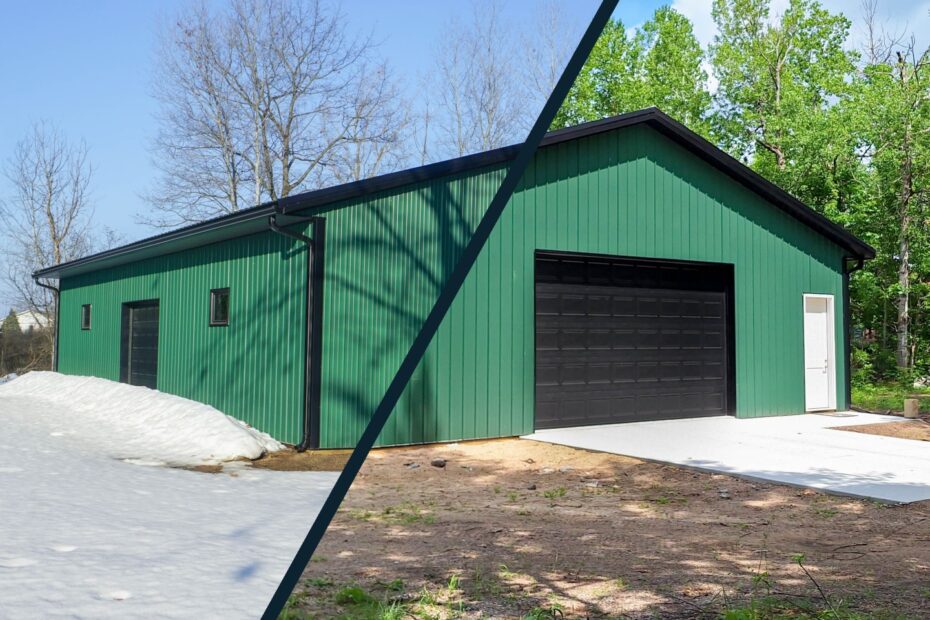
When planning a post frame building, it’s essential to consider how seasonal changes can impact its design and functionality. From scorching summers to frigid winters, your structure needs to withstand various weather conditions while maintaining comfort and efficiency. In this blog post, we’ll explore six key seasonal considerations to keep in mind when designing your post frame building.
1. Insulation for Temperature Control
Winter Considerations
In colder climates, proper insulation is crucial to keeping your building warm during the winter months. Insufficient insulation can lead to significant heat loss, increasing energy costs or creating potential areas for condensation and water damage.
- Insulate the Concrete Pad: Before pouring concrete, add insulation, at least around the perimeter. Even if you don’t plan to heat your building, those plans could change in the future. Insulation is nearly impossible to add later.
- Types of Insulation: Consider using spray foam insulation, fiberglass batts, or rigid foam panels. Each type offers different R-values (a measure of thermal resistance) and can be tailored to your specific needs.
- Sealing Gaps: Ensure that all gaps around windows, doors, and where different materials meet are properly sealed. This prevents drafts and helps maintain a consistent indoor temperature.
Summer Considerations
In summer, the goal shifts to keeping the interior cool and comfortable.
- Reflective Roof Materials: Opt for reflective roofing materials that reduce heat absorption. This can significantly lower indoor temperatures and decrease the need for air conditioning.
- Ventilation: Incorporate proper ventilation systems, such as ridge vents or gable vents, to promote airflow and reduce heat buildup. This is particularly important in attics or loft spaces.
- Ceiling Insulation: An insulated ceiling and vented attic space can prevent the hot roof from transferring heat into the interior of the building.
2. Roof Design for Snow and Rain
Snow Loads
If you live in an area with heavy snowfall, which describes pretty much all of Michigan, your roof must be designed to handle the added loads.
- Steep Roof Pitch: A steeper roof pitch can allow snow to slide off more easily, reducing the risk of structural damage.
- Truss Systems: Using engineered trusses can provide additional support for snow loads, ensuring the safety and integrity of your building.
- Roof Slope: Consider the direction of the roof in regards to intended use and doors. If snow slides off in front of a door, it can be hazardous to people and requires additional maintenance and snow removal. Snow bars can be used to mitigate this but increase the snow load on the entire building, as the snow can no longer slide off easily.
- Snow Drifts: the windy conditions that often accompany snowfall can create large, heavy drifts on the roof near the ridge (peak). Ensure your building is designed to accommodate these loads.
Rain Management
Heavy rainfall can lead to water accumulation and potential leaks, so make sure the site is prepped with drainage in mind. Consider the following:
- Overhangs: Design overhangs to direct water away from the foundation and prevent erosion. This also helps protect doors and windows from rain exposure. It also helps prevent ice buildup around the foundation during freeze-thaw cycles.
- Gutters and Downspouts: Install a proper gutter system to channel rainwater away from the building. Ensure downspouts lead to drainage areas away from the foundation.
3. Wind Resistance
Wind can be a significant factor, especially in open areas or regions prone to storms. Design your post frame building with wind resistance in mind:
- Orientation: Position your building to minimize wind exposure. Consider the prevailing wind direction and orient the entrance away from strong winds when possible.
- Bracing and Anchoring: Use bracing or shear wall panels in the wall framing to provide additional stability. Ensure that your building is anchored properly to its foundation to withstand strong gusts.
4. Humidity Control
Managing moisture levels is essential to prevent mold and structural damage.
- Vapor Barriers: Install vapor barriers in walls and ceilings to prevent moisture from entering the building. This is particularly important in regions with fluctuating temperatures. However, ensure your walls have a way to “dry out”. Installing (even accidentally) two vapor barriers can trap moisture in the wall. For instance, closed cell foam should never be used in conjunction with an interior vapor barrier, including some paints.
- Dehumidification Systems: Consider incorporating dehumidifiers or HVAC systems designed to manage humidity levels effectively. This ensures a comfortable indoor environment year-round.
5. Landscaping for Protection
Landscaping can play a crucial role in protecting your post frame building from seasonal weather challenges.
- Windbreaks: Planting trees or shrubs can act as a windbreak, reducing the impact of strong winds on your building.
- Shade Trees: Strategically placed trees can provide shade during the summer, lowering cooling costs and enhancing outdoor spaces.
6. Seasonal Maintenance Planning
No matter how well your building is designed, seasonal maintenance is crucial for longevity. Develop a maintenance schedule that includes:
- Fall Preparations: Clear gutters, check insulation, and inspect the roof for potential issues before winter sets in.
- Spring Checkups: After winter, inspect for any damage caused by snow and ice, and address any water drainage issues that may have arisen.
Michigan Building Design Provides All-Weather Pole Building Plans
Design your post frame building for all weather, keeping seasonal considerations in mind to ensure its longevity and comfort throughout the year. By focusing on insulation, roof design, wind resistance, humidity control, and strategic landscaping, you can create a structure that stands strong against the elements.
If you’re looking for pole barn plans that take these considerations – and more – into account, Michigan Building Design provides customized, engineered designs for post frame buildings. Our building blueprints are permit-ready, common-sense structural plans to help you or your builder construct an efficient and long-lasting addition to your property.
Ready to start designing your all-weather post frame building? It’s easy to get started by calling (231) 577-9523 or connecting with us via our contact form here. Let us help you create a space that thrives in any season!